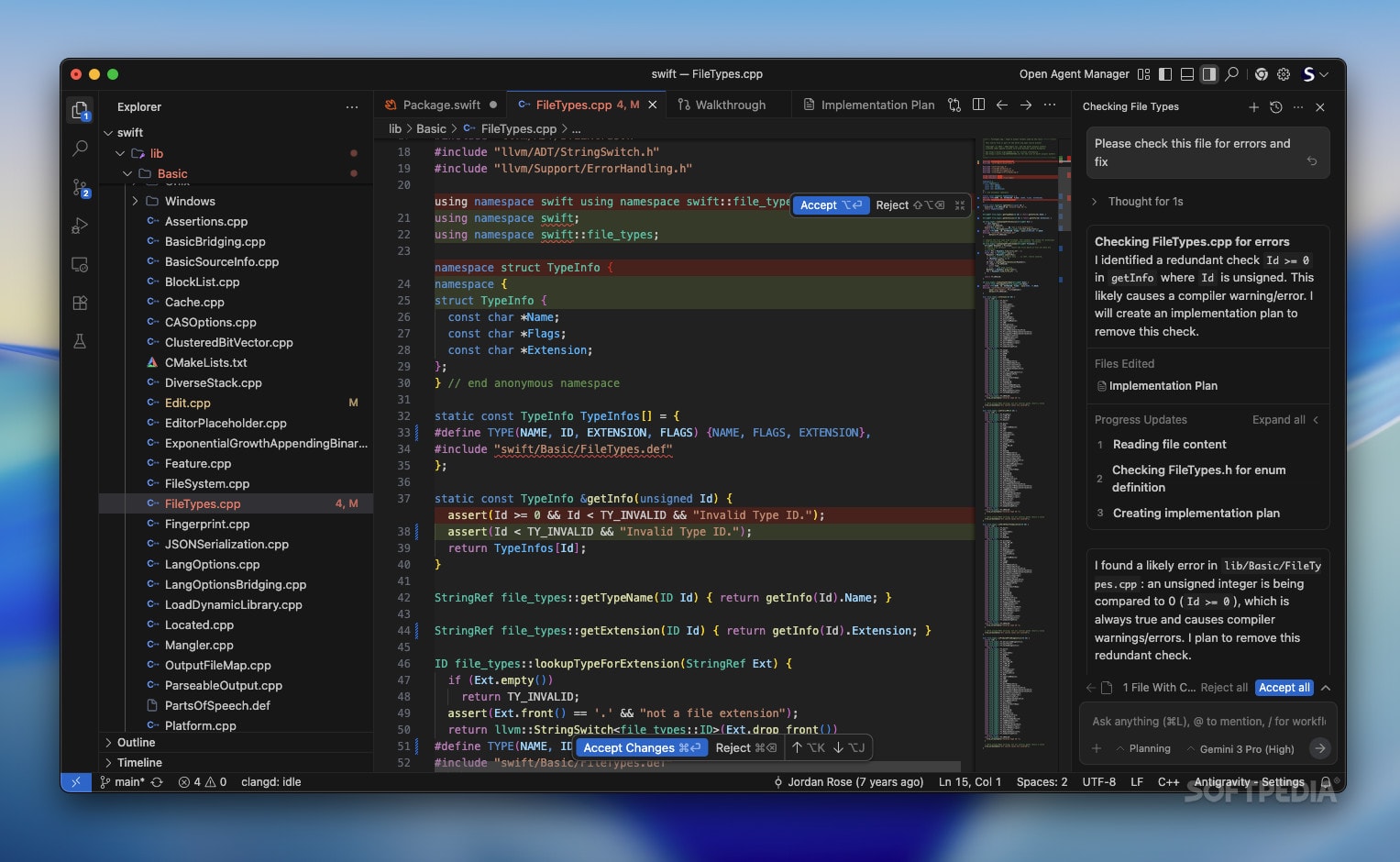
Google Antigravity – an ecosystem where the barrier between thought and execution is dissolved by the power of Gemini 3.
Introduction: The Point of No Return
We have reached the end of the course, but we have only just arrived at the beginning of a new era in software engineering. Throughout the previous six chapters, we dismantled the traditional definition of “coding.” We stripped away the manual labor of syntax, the friction of configuration, and the anxiety of deployment.
This final chapter is not just a summary; it is a consolidation. It is the Unified Theory of Agentic Development. We will pull together the philosophy, the architecture, the prompting strategies, the verification loops, the operations, and the team dynamics into a single, cohesive operational model.
The transition to Antigravity is a “one-way door.” Once you experience the velocity of orchestrating agents to build systems, you cannot go back to typing function(){} by hand. The gravity of the old world feels too heavy.
The Consolidated Roadmap: A 360-Degree View
Let us revisit the core pillars we have established, viewing them now not as separate topics, but as interlocking gears in a single engine.
1. The Philosophical Shift (The Mindset)
- Old World: You are the writer. You type every character. You are limited by your typing speed and your memory of API docs.
- Antigravity World: You are the Architect. You define the intent, and the agents handle the implementation. This is the Inversion of Control. Your value metric shifts from “Lines of Code Written” to “Features Shipped Correctly.”
2. The Architecture (The Foundation)
- The Silo: We learned that agents need a bounded context. You cannot just “let AI loose” on the internet. You build a Silo containing your repo, your docs, and your rules.
- The Constitution: You govern the swarm with a meta-file (policy). This ensures that the agents don’t just write code that works, but code that fits your style and security standards.
3. The Instruction (The Interface)
- C-G-C: Context, Goal, Constraints. This is the syntax of command.
- Chain-of-Thought: You force the agent to plan before it builds. You treat the prompt as a specification document, using precise keywords like “idempotent” and “atomic” to trigger deep technical reasoning.
4. The Verification (The Safety Net)
- Trust but Verify: We acknowledged that AI can hallucinate.
- The Loop: We countered this with the Verification Loop. The Builder writes, the Critic attacks, and the Compiler judges. This autonomous cycle filters out 90% of errors before they reach your screen.
5. The Operations (The Scale)
- Infrastructure as Intent: We stopped writing YAML. We started describing architecture.
- Continuous Agency: We moved from static CI pipelines to dynamic, self-healing agents that can rollback bad deploys and optimize costs while you sleep.
6. The Collaboration (The Culture)
- The AI Teammate: We integrated agents into Jira and Slack. They became the librarians, the project managers, and the first-pass reviewers, reducing the “Communication Tax” of teamwork.
The Master Workflow: From Synapse to Server
To consolidate this knowledge, let’s walk through a single, end-to-end workflow. This is the Antigravity Lifecycle.
Scenario: You are building a “Ride-Sharing Pricing Engine.”
Phase 1: Initialization & Planning
You do not open a code editor. You open the Antigravity Canvas.
- Action: You paste the Product Requirement Document (PRD) into the context.
- Prompt: “Act as the Architect. Analyze this PRD. Identify the three hardest technical challenges. Propose a microservices architecture to handle them. Generate a
constituiton.yamlthat enforces strict typing and 100% test coverage for money-handling logic.” - Output: The agent warns you about “Concurrency in Ride Locking” and proposes a Redis-based locking mechanism. You approve.
Phase 2: The Swarm Launch
You give the “Go” command. The swarm activates.
- Agent A (Database): Writes the SQL schema and migration scripts.
- Agent B (API): Generates the gRPC Protobuf definitions.
- Agent C (Core Logic): Begins implementing the pricing algorithm.
- The Critic: Immediately starts writing failure scenarios (“What if the ride distance is negative?”, “What if the currency is unknown?”).
Phase 3: The Verification Crucible
Agent C finishes the pricing function.
- The Sandbox: The code runs in an isolated VM.
- The Clash: The Critic’s test fails. The pricing logic crashes on “Negative Distance.”
- The Loop: Agent C reads the error. It modifies the code to return a
400 Bad Requeston negative distance. It re-runs the test. It passes. - The Human Glimpse: You see a green checkmark next to “Pricing Module.” You click to inspect. The code is clean, commented, and tested.
Phase 4: Integration & Review
- The PR: The agents open a Pull Request.
- The Docs: The Librarian Agent automatically updates the
README.mdand generates an API reference. - The Review: You review the high-level logic. You notice the “Surge Pricing” multiplier is too aggressive.
- The Correction: You leave a comment: “Cap surge multiplier at 3.0x.”
- The Fix: The Builder Agent reads your comment, updates the code, adds a test for the cap, and pushes the commit.
Phase 5: The Deployment
- The Intent: You say, “Deploy to Staging.”
- The Ops Agent: Provisions a Kubernetes cluster on GCP. It sets up the load balancer. It injects the secrets securely.
- The Verification: It runs a “Smoke Test” against the live staging URL. It confirms the API is responding.
Total Time Elapsed: 4 hours. Legacy Time Equivalent: 4 days.
The Competency Model: The Antigravity Engineer
Who are you in this new world? If the agents do the coding, what is your job?
The role of the software engineer is evolving into the Systems Orchestrator. To survive and thrive, you must master three new competencies.
1. Semantic Architecture
You no longer need to memorize the syntax of useEffect in React. But you must deeply understand State Management. You must know when to use a cache, why to use a message queue, and how to design for eventual consistency.
- Old Skill: Writing a SQL query.
- New Skill: Designing a schema that scales to 1 million users and instructing the agent to optimize the queries for that scale.
2. Adversarial Auditing
Since the AI writes code fast, you must review code fast. But you cannot read every line. You must learn Risk-Based Auditing.
- Technique: You focus your attention on the “Critical Path” (Authentication, Payments, Data Privacy). You trust the agent on the “Trivial Path” (CSS styling, helper functions).
- Mindset: You assume the AI is confident but wrong. You look for the subtle logic bugs that the compiler misses.
3. Prompt Architecture
This is the ability to structure a problem so that an AI can solve it. It is “Computational Thinking” applied to natural language.
- Skill: Breaking a massive feature (“Build a dashboard”) into 10 atomic, testable instructions. The better you decompose the intent, the higher the quality of the output.
Common Pitfalls: The Anti-Patterns
Even with Antigravity, projects can fail. Here is how to avoid the “Valley of Despair.”
1. The “Lazy Prompter” Syndrome If you treat Antigravity like a magic wand (“Build me an app”), you will get a generic, buggy toy.
- Fix: Be specific. Be technical. Respect the C-G-C Framework. Garbage in, Garbage out.
2. Context Pollution If you never clear your session, the context window fills with noise. The agent gets confused between the task you finished yesterday and the task you started today.
- Fix: Practice Context Hygiene. Start fresh sessions for new features. Pin only the necessary files.
3. The “Review Bypass” The most dangerous thing you can do is blind-merge AI code. “It looks right, so it must be right.”
- Fix: Never disable the Verification Loop. Never skip the Human Gate. The speed of Antigravity is seductive; do not let it seduce you into negligence.
The Economic Reality: An Economy of Abundance
We are moving from an economy of Scarcity (limited developer hours) to an economy of Abundance (infinite intelligence).
In the past, we didn’t write unit tests because “we didn’t have time.” We didn’t update docs because “we were too busy.” We didn’t refactor because “it was too risky.”
With Antigravity, “Time” is no longer the excuse. The cost of writing a test is near zero. The cost of refactoring is near zero.
This raises the bar for quality.
- Mediocre software is no longer acceptable. If an AI can write perfect boilerplate, your product must offer something more than just basic functionality.
- The Value Shift: Your salary is not justified by your ability to write code. It is justified by your ability to solve business problems using code. The “Code Monkey” is extinct; the “Product Engineer” is king.
The Future: Beyond Antigravity
Where does Gemini 3 go from here?
1. Self-Evolving Codebases Future versions of Antigravity will not wait for your commands. They will proactively refactor code in the background. You will wake up to a Pull Request: “I noticed the user table was getting slow. I indexed the ’email’ column and optimized the query. Performance improved by 40%.”
2. Natural Language Programming (NLP) Eventually, the code itself (Python, Java, C++) might become an intermediate representation, like Assembly is today. We will stop reading code. We will read the Intent Log. The “Source Code” will be the English prompt history. The “Binary” will be the machine code generated by the AI.
3. The One-Person Unicorn We will see the rise of the “100x Engineer.” Not because they are smarter, but because they have an army of 100 agents. A single developer will be able to build, deploy, and manage a platform that previously required a team of 50.
