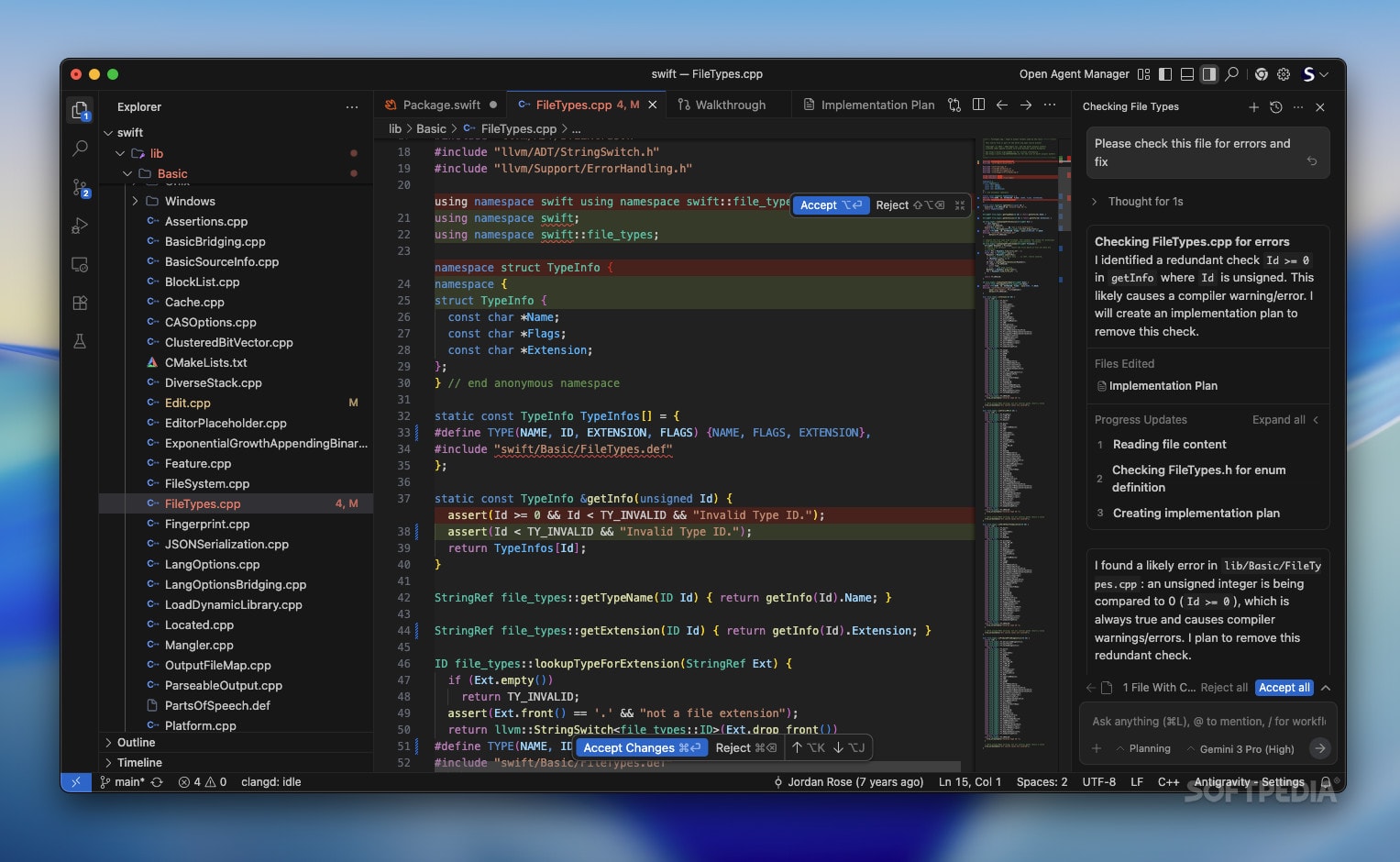
Google Antigravity attacks this tax by elevating the AI from a “tool” to a “teammate.” In an Antigravity workflow, the Gemini 3 agents do not just sit in the IDE waiting for code prompts. They exist in your Slack channels, your Jira boards, and your pull requests. They participate in the social fabric of the development team.
Introduction: The Communication Tax
In software engineering, writing code is often the easy part. The hard part is everything else: figuring out what to build, agreeing on how to build it, updating the ticket tracker, writing the documentation, explaining the code to a junior developer, and remembering what you did yesterday for the daily stand-up.
This is the “Communication Tax.” It is the friction that slows teams down as they grow larger.
This chapter explores the collaborative layer of Antigravity. We will look at how agents manage projects, maintain living documentation, and even conduct code reviews, fundamentally changing the dynamics of human-computer interaction.
The Project Manager Agent: From Ticket to Task
In the old world, a Product Manager (PM) wrote a ticket in Jira. A developer read it, interpreted it, asked clarifying questions, and then started coding.
In Antigravity, the Project Management (PM) Agent sits between the ticket tracker and the code.
The Ingestion Protocol
When a new ticket lands in your board (Linear, Jira, Trello), the PM Agent analyzes it.
- Ticket: “Fix the misalignment on the checkout button.”
- Analysis: The agent checks the codebase. It identifies three “Checkout Button” components. It realizes the ticket is ambiguous.
- Action: It comments on the ticket before a human developer even sees it.
- Agent Comment: “Which checkout button? The cart drawer, the main checkout page, or the mobile sticky footer? Please specify.”
This is Asynchronous Clarification. By the time the human developer opens the ticket, the ambiguity has been resolved.
The Context Injection
Once the ticket is ready, the PM Agent prepares the “Context Pack” for the Builder Agent. It bundles:
- The Ticket Description.
- The relevant screenshots attached to the ticket.
- The specific file paths related to the feature.
- Relevant discussions from Slack that mentioned this feature.
This eliminates the “Discovery Phase” for the developer. You don’t hunt for files; the agent presents them to you on a silver platter.
Living Documentation: The Librarian Persona
Documentation is the lie we tell ourselves. We say we will keep it updated, but we never do. Code changes faster than wikis.
Antigravity solves this with the Librarian Agent. This persona has read-only access to the code and write access to your documentation platform (Notion, Confluence, ReadMe).
The Auto-Update Loop
When a Pull Request (PR) is merged, the Librarian wakes up.
- Diff Analysis: It reads the changes. “Added a new parameter
timeoutto thefetchUserfunction.” - Impact Analysis: It searches the documentation for references to
fetchUser. - Drafting: It drafts an update. “Updated API Docs:
fetchUsernow accepts atimeout(default: 5000ms).” - Verification: It acts as a user. It tries to run the
fetchUserfunction without the parameter to see if the docs need to mention backward compatibility. - Publishing: It pushes the update to the internal wiki.
The “Explain It Like I’m 5” (ELI5) Mode
The Librarian is also an on-demand teacher.
- Human Query: “How does the authentication flow work in this repo? I’m new.”
- Librarian Response: It generates a fresh, up-to-date sequence diagram and a 3-paragraph summary. It doesn’t recite a stale file from 2023; it generates this explanation based on the code as it exists right now.
The Code Review: The AI as Critic and Defender
The Pull Request (PR) is the sacred gate of software quality. It is also a bottleneck. Humans wait hours or days for review.
Antigravity introduces Pre-Flight Reviews.
The First Line of Defense
Before a human sees your PR, the Critic Agent reviews it.
- Style Check: “Line 45 violates the indentation rule.”
- Logic Check: “You are mapping over an array without a unique key.”
- Security Check: “This regex is vulnerable to ReDoS attacks.”
The agent posts these as comments on the PR. The developer fixes them. By the time the human reviewer arrives, the “nits” (trivial errors) are gone. The human can focus on architecture and business logic.
The AI Defender
Conversely, the AI can defend your code. If a human reviewer asks, “Why did you use a Reduce function here? It seems complex,” the Builder Agent can draft a reply for you:
- Draft Reply: “We used
Reducebecause we need to transform the data structure while simultaneously filtering out null values. AMapfollowed by aFilterwould iterate twice;Reducedoes it in one pass, improving performance by O(n) for large datasets.”
You approve the draft, and you look like a genius.
Managing Scope Creep: The Product Owner Persona
“Scope Creep” is when a simple task balloons into a massive rewrite. Developers are notorious for this (“While I’m here, I’ll just refactor the entire database layer…”).
The Governance Agent watches for this.
- Instruction: “Update the font color.”
- Action: The developer starts rewriting the CSS build pipeline.
- Intervention: The agent flags the activity. “Warning: You are modifying 45 files for a task estimated at 2 points. This exceeds the drift threshold. Is this intentional?”
This subtle nudge keeps projects on track. It forces the developer to admit they are rabbit-holing.
The Stand-Up: Automating the Status Report
The daily stand-up meeting is often a waste of time. “Yesterday I did X, today I will do Y.”
Antigravity automates the status report. Since the agents are observing your work, they know exactly what you did.
The Auto-Generated Stand-up:
User: @Antigravity, generate my stand-up for Slack. Agent: “Here is your update:
- Yesterday: Completed the Login Refactor (PR #402). Fixed a regression in the User Profile component.
- Today: Starting on the Payment Gateway Integration.
- Blockers: Currently waiting for the Stripe API credentials from DevOps.”
You review it, hit send, and get back to work. The “status update” becomes a byproduct of work, not a separate task.
Onboarding: The Infinite Patience
Onboarding a new developer is expensive. Senior engineers spend weeks explaining the codebase.
In an Antigravity team, the Onboarding Agent takes this load. A new hire can ask the agent unlimited “stupid questions” without fear of judgment.
- “Where is the entry point?”
- “Why do we use Redux instead of Context here?”
- “How do I run the local server?”
The agent answers instantly, with links to the code. It is the mentor that is never too busy and never gets annoyed.
Knowledge Management: The Tribal Brain
Every team has “Tribal Knowledge”-unwritten rules and history. “We don’t touch the legacy billing code because it breaks if you look at it wrong.”
Antigravity captures this. When a developer makes a comment in code like // TODO: Do not touch this, magic happens here, the agent indexes it as a Risk Hotspot.
If another developer tries to edit that file six months later, the agent warns them:
- “Caution: This module has been flagged as fragile. History shows 3 regressions in the last year caused by edits here. Recommend adding extra regression tests before proceeding.”
The AI preserves the “scars” of the team, preventing history from repeating itself.
The Psychology of the AI Teammate
There is a psychological shift when working with Antigravity. You stop treating the computer as a typewriter and start treating it as a collaborator.
Trust calibration
At first, you will distrust the agent. You will check every line. This is good. Over time, you will learn the agent’s strengths (boilerplate, tests, refactoring) and weaknesses (high-level creative direction, nuanced UI design). You will learn to delegate the former and hoard the latter.
The “Empty Page” Fear
Writers fear the blank page. Developers fear the empty directory. Antigravity eliminates this. You can always say, “Scaffold a basic structure.” You are never starting from zero. You are always starting from a draft. This reduces procrastination and anxiety.
Keyword Deep Dive: Collaboration Terminology
Asynchronous Alignment The ability to get everyone on the same page without a meeting. The PM Agent ensures alignment by clarifying requirements on tickets before work starts.
Bus Factor Mitigation The “Bus Factor” is the number of team members who can get hit by a bus before the project collapses. If only Bob knows the deployment script, the Bus Factor is 1. Antigravity increases the Bus Factor. The Agent knows the deployment script. The knowledge is externalized into the system, not locked in Bob’s head.
Semantic Search
Finding things by meaning, not keyword. You don’t search for function processPayment. You search for “Where is the money handled?” The Librarian Agent understands the intent and points you to stripe_handler.ts.
Case Study: The 24-Hour Hackathon
Imagine a team of 3 developers building a product in 24 hours.
Hour 0-2: The team brainstorms. They feed the whiteboard photo to the Architect Agent. It generates the database schema and API contracts.
Hour 2-12: The team splits up.
- Dev A (Frontend) prompts the UI Agent to build components.
- Dev B (Backend) prompts the Builder Agent to write resolvers.
- The Integration Agent mocks the API so Dev A can work even before Dev B is finished.
Hour 12-20: Merge time. Conflicts arise. The Merge Agent analyzes the conflicts. “Dev A changed the spacing, Dev B changed the logic. I can merge these automatically.” It resolves the non-semantic conflicts, leaving only the critical logic clashes for humans.
Hour 20-24: Polish and Deploy. The Critic Agent finds a critical bug. The Docs Agent writes the README.
Result: The team ships a product that would have taken 2 weeks without Antigravity. The velocity is not just doubled; it is compounded.
The Hybrid Team: Humans + Agents
The future structure of a tech team is not “Developers and Managers.” It is “Orchestrators and Swarms.”
- 1 Senior Orchestrator (Human)
- 3 Junior Orchestrators (Humans)
- 10 Specialized Agents (AI)
The humans provide the taste, the empathy for the user, and the creative spark. The agents provide the labor, the memory, and the verification.
This structure allows small teams to build massive systems. The “Mythical Man-Month” (adding manpower to a late project makes it later) is challenged, because adding digital manpower does not add communication overhead.
Conclusion of Chapter 6
Google Antigravity does not just change how code is written; it changes how teams behave. By automating the drudgery of project management, documentation, and review, it frees humans to focus on the high-value work: solving user problems.
We have now covered the entire lifecycle of software development. But there is one final piece. How do we bring this all together? How do we synthesize the Philosophy, the Architecture, the Prompting, the Verification, the Ops, and the Collaboration into a coherent career strategy?
In the final chapter, Chapter 7: The Antigravity Manifesto, we will consolidate everything. We will provide a unified summary, a checklist for adoption, and a vision for the future of the “Antigravity Engineer.”
Key Takeaways
- The PM Agent: Translates ambiguous tickets into specific technical contexts.
- Living Documentation: The Librarian Agent keeps docs in sync with code automatically.
- Pre-Flight Reviews: Agents fix style and lint errors before humans review the PR.
- Stand-Up Automation: Status reports are generated from work logs, not memory.
- Bus Factor: Agents externalize knowledge, reducing dependency on single individuals.
