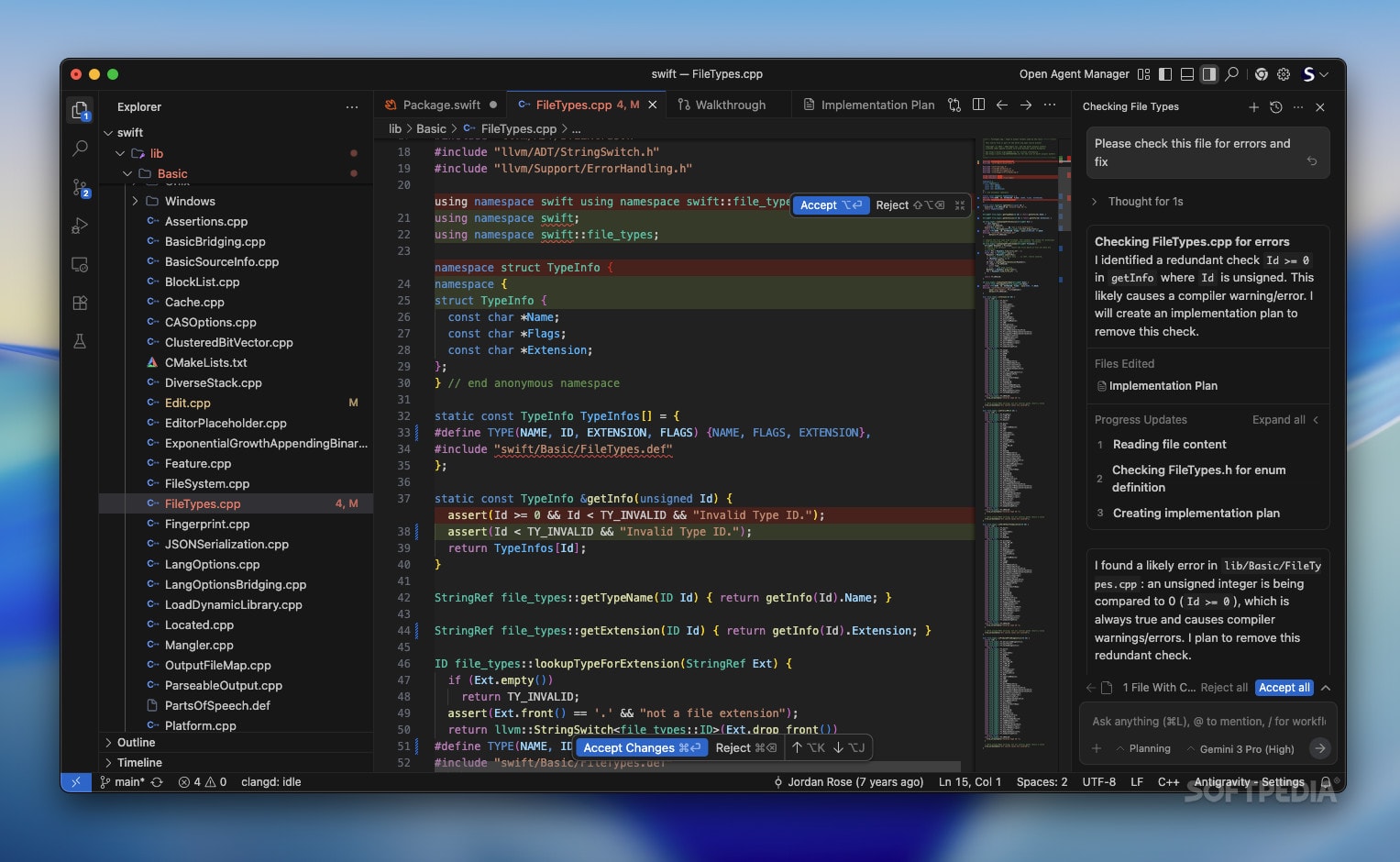
Google Antigravity demolishes the wall entirely. In the Antigravity ecosystem, the agent that writes the code is the same agent that defines the infrastructure. There is no handoff. There is only the Continuum of Delivery.
Introduction: Crossing the Air Gap
For decades, there has been a massive wall between “Development” (writing code) and “Operations” (running code). We called it the “Wall of Confusion.” Developers threw software over the wall, and Operations engineers scrambled to keep it alive. DevOps was the cultural movement to break down this wall, but in practice, it often just meant developers had to learn Kubernetes in addition to React.
This chapter explores how Gemini 3 agents manage the cloud. We move beyond the IDE and into the realm of Infrastructure as Code (IaC), CI/CD pipelines, and the terrifying, beautiful concept of Autonomous Ops.
Infrastructure as Intent
The core philosophy of Antigravity DevOps is that infrastructure is just another form of code, and therefore, it is subject to the same “Intent Decomposition” we learned in Chapter 3.
In the past, to deploy a microservice, you needed to write:
- A Dockerfile.
- A Helm chart.
- A Terraform HCL file.
- A GitHub Actions YAML.
In Antigravity, you define the Infrastructure Intent.
Prompt: “Deploy this service to a serverless container environment in GCP (region us-east1). It needs a private Postgres instance, a Redis cache, and auto-scaling up to 10 instances based on CPU load. Ensure it is behind a load balancer with SSL termination.”
The Infrastructure Agent receives this intent and compiles it into the necessary artifacts. It doesn’t matter if it generates Terraform, Pulumi, or CloudFormation; the agent manages the abstraction layer. You are no longer debugging indentation errors in YAML files. You are managing the architecture.
The Ops Agent Persona in Google Antigravity
Just as we have the Builder and the Critic, we now introduce the Ops Agent.
Role: The Reliability Engineer. Directives: Stability, Security, Cost Efficiency. Capabilities: Access to cloud provider APIs (AWS SDK, Google Cloud CLI), read access to production logs, and permission to trigger deployment pipelines.
The Ops Agent is the guardian of production. While the Builder wants to ship features fast, the Ops Agent asks:
- “What is the rollback strategy?”
- “Have we allocated enough memory for this data processing job?”
- “This deployment will increase our monthly cloud bill by 15%. Is this authorized?”
The Negotiation
When you attempt to deploy, you often witness a negotiation between agents.
- Builder: “Ready to deploy Feature X.”
- Ops Agent: “Blocking deployment. Feature X introduces a new dependency on ImageMagick which increases the container size by 200MB, violating the ‘Lightweight Container’ policy in the Constitution.”
- Resolution: The Builder refactors to use a lighter library, or you (the human) override the policy.
Continuous Agency in CI/CD
We previously discussed “Continuous Agency” (CA). In the deployment phase, CA replaces static CI pipelines.
Static Pipeline (Legacy):
- Checkout Code.
- Run Tests.
- Build Docker Image.
- Deploy. If step 2 fails, the pipeline stops. A human gets an email. The human wakes up, fixes it, and pushes again.
Agentic Pipeline (Antigravity):
- Checkout Code.
- Run Tests -> Tests Fail.
- Diagnosis: The Pipeline Agent analyzes the failure. “Unit test failed due to timestamp mismatch.”
- Auto-Remediation: The Agent patches the test (or the code), commits the fix to a temporary branch, and re-runs the pipeline.
- Success: The pipeline proceeds.
- Notification: “Deployed successfully. Note: I had to apply a hotfix to
utils.tsto pass the pipeline. Review the commit here.”
The pipeline is no longer a dumb script; it is an intelligent worker that attempts to push the release forward within safety boundaries.
Blue/Green Deployments: The Safety Net
Agents never deploy using “Big Bang” strategies (replacing all servers at once). They default to Progressive Delivery (Blue/Green or Canary).
The Deployment Agent orchestrates this dance:
- Spin Up Green: It deploys the new version alongside the old one (Blue).
- Traffic Shift: It routes 1% of live traffic to Green.
- Vibe Check: It watches the logs. Not just for crashes, but for anomalies. Is latency 10ms higher? Are users clicking “Back” more often?
- Scale or Kill:
- Good Vibes: Increase traffic to 10%, then 50%, then 100%.
- Bad Vibes: Immediate rollback. Kill Green. Alert Human.
This manual process used to take teams of engineers. Antigravity automates it. The agent watches the dashboard so you don’t have to.
Secret Management: The Keys to the Kingdom
The most dangerous part of Ops is handling secrets (API keys, database passwords).
Antigravity’s Zero-Trust Policy:
- Agents never see raw secrets.
- Agents see references.
When an agent writes code that needs the Stripe Key, it writes:
const stripeKey = process.env.STRIPE_SECRET_KEY;
It does not hardcode the key.
It does not write the key into a .env file in the repo.
Instead, the Security Agent interfaces with your Secret Manager (Vault, AWS Secrets Manager, Google Secret Manager).
- Action: “I need to inject the Stripe Key into the production environment.”
- Protocol: The Security Agent generates a temporary, short-lived credential (if supported) or verifies the reference exists in the Secret Manager. It ensures that the IAM role attached to the production container has permission to access that specific secret.
If you try to paste a raw private key into the chat window, the Governance Layer redacts it immediately and warns you.
Self-Healing Infrastructure
The true power of the “Agent in the Cloud” is realized when things break at 3:00 AM.
Scenario: A memory leak causes your worker nodes to crash.
- Legacy: PagerDuty wakes you up. You groggily restart the servers. You spend the next day debugging.
- Antigravity:
- Detection: The Monitoring Agent sees a spike in RAM usage.
- Reaction: It triggers an auto-scale event to add more nodes to handle the load.
- Mitigation: It restarts the zombie processes.
- Investigation: It grabs a heap dump from the dying process.
- Analysis: It analyzes the heap dump. “The
imageBufferarray is growing indefinitely.” - Report: When you wake up, you see a notification: “Production incident at 3:00 AM. Mitigated by scaling. Root cause identified: Memory leak in
imageBuffer. Draft fix prepared in PR #405.”
The agent turns an emergency into a “to-do” item.
Cost Optimization: The FinOps Agent
Cloud bills are notorious for spiraling out of control. Developers spin up expensive GPU instances and forget to turn them off.
The FinOps Agent runs audits on your infrastructure.
- “You have a
t3.xlargeinstance that has been running at 5% CPU utilization for 30 days. I recommend downsizing tot3.microto save $140/month. Approve?” - “We are storing 5TB of logs in standard S3 storage. These logs are rarely accessed. I recommend moving them to S3 Glacier to save 80%. Approve?”
This agent pays for the Antigravity subscription by itself. It constantly fights the entropy of cloud waste.
Keyword Deep Dive: Ops Terminology
Idempotency (Again) In Ops, this is even more critical. If the agent runs the “Create Database” script twice, it shouldn’t delete your existing database. Antigravity uses State Files (like Terraform state) to know what already exists. It reasons about the delta (the difference between what you want and what you have).
Immutable Infrastructure Antigravity prefers to never “patch” a server. If a server needs an update, it shoots the old server and builds a new one. This prevents “Configuration Drift” where servers become unique snowflakes that are impossible to replicate.
Observability This is more than monitoring. Monitoring tells you that the system is down. Observability allows the agent to ask why. Antigravity instruments your code with OpenTelemetry traces automatically. When a request fails, the agent can trace the path across 5 microservices to find the exact line of code that timed out.
The Human’s Role in Autonomous Ops
If the agents do everything, what do you do?
You become the Compliance Officer and the Architect.
- You define the SLA (Service Level Agreement): “The system must have 99.9% uptime.”
- You define the Budget: “Do not exceed $500/month.”
- You define the Region: “Data must stay in the EU for GDPR.”
You set the boundaries. The agents play the game within those boundaries. If they cannot meet the SLA within the Budget, they alert you to make a business decision (Increase budget? Lower SLA?).
Case Study: The Black Friday Event
Let’s look at a high-stress scenario: An e-commerce flash sale.
Preparation: You tell the Planning Agent: “We expect 10x traffic on Friday. Pre-warm the load balancers and scale the database read replicas.” The agent executes the scaling plan 24 hours prior.
The Event: Traffic hits 15x. The database CPU hits 90%. The Ops Agent sees this. It knows the “Max Replicas” limit is set to 5. It calculates that we need 8. It hits a Permission Gate. It messages you on Slack: “Critical Alert: DB CPU critical. Requesting emergency permission to break budget cap and scale to 8 replicas. Estimated cost: +$50/hour.” You reply: “Approve.” The agent scales. The site stays up.
The Aftermath: Traffic drops. The agent scales down. It generates a “Post-Mortem” report analyzing the traffic patterns and suggesting architectural changes to handle 15x traffic more cheaply next time.
Conclusion of Chapter 5
Deployment in Google Antigravity is not the end of the development process; it is the beginning of the lifecycle. By treating operations as a software problem, agents can monitor, heal, and optimize systems with a vigilance no human can match.
We have now covered the entire technical stack:
- Philosophy (Chapter 1)
- Architecture (Chapter 2)
- Instruction (Chapter 3)
- Verification (Chapter 4)
- Deployment (Chapter 5)
But there is a layer above the code. Software is built by teams, for users. How do we manage the project? How do we handle the “soft skills” of software engineering-requirements gathering, agile management, and documentation?
In the next chapter, we will explore Project Management & Collaboration. We will see how Antigravity integrates with your team, manages Jira tickets, writes its own documentation, and even runs your daily stand-up.
Key Takeaways in Google Antigravity
- Infrastructure as Intent: Describe the architecture, let the agent write the Terraform.
- The Ops Agent: A persona dedicated to stability, security, and cost.
- Continuous Agency: Pipelines that can fix themselves.
- Progressive Delivery: Automated Blue/Green rollouts with anomaly detection.
- Self-Healing: Agents that restart services and scale resources at 3 AM.
