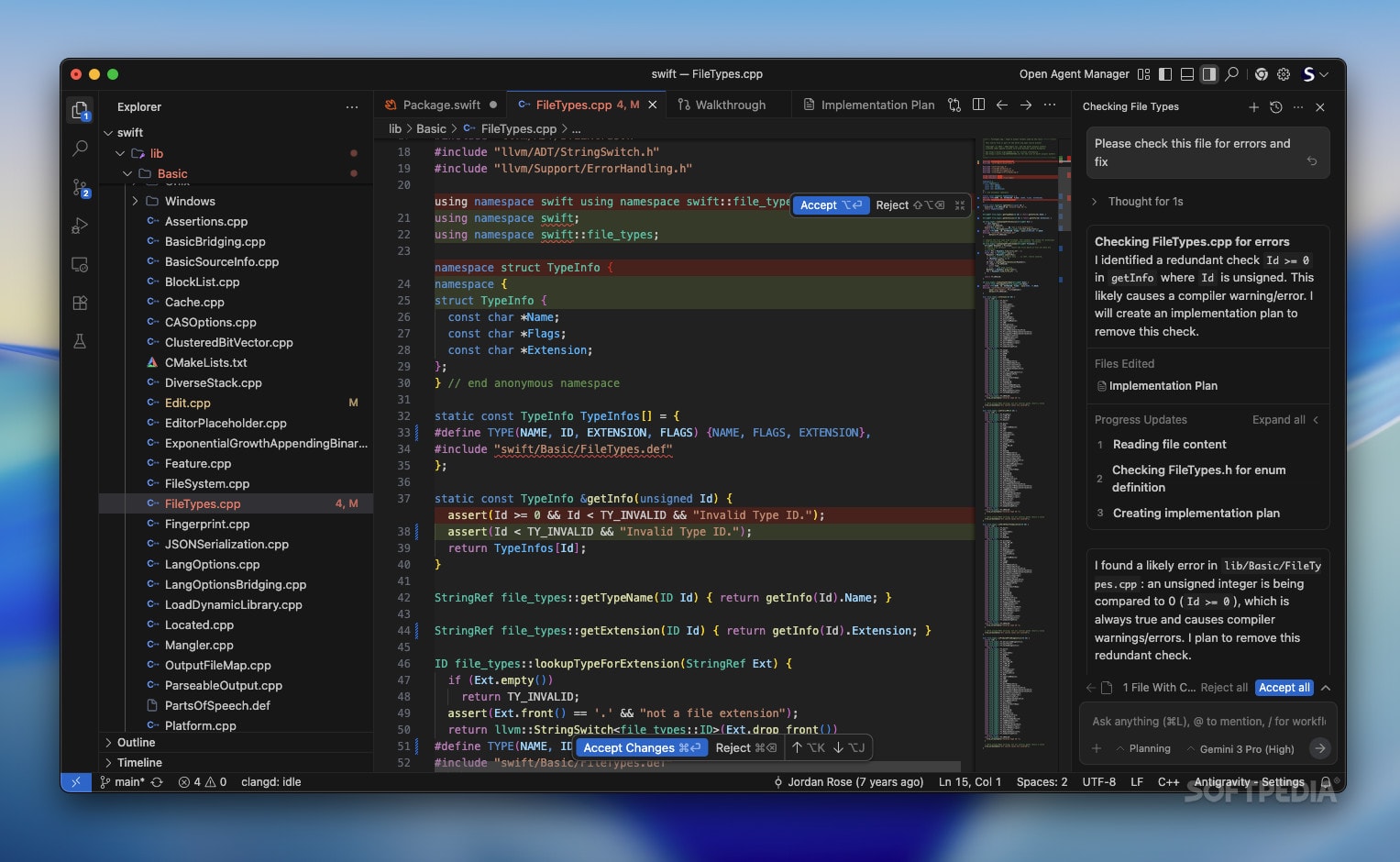
Google Antigravity fundamentally inverts this relationship through the Verification Loop.
Introduction: The Crisis of Confidence
The single greatest barrier to the adoption of AI in software engineering has been trust. In the early era of Large Language Models (LLMs), a developer would ask for a function, copy it into their editor, run it, and watch it fail. The AI was a “confident liar.” It would invent libraries, hallucinate syntax, and confidently assert that 2 + 2 = 5 if the context drifted enough.
This created a workflow of “Generate -> Debug -> Regret.” The time saved in typing was lost in debugging the AI’s subtle errors.
In Antigravity, the AI does not output code to the user until it has proven-to itself-that the code works. This is the difference between a text generator and an engineering agent. Chapter 4 explores the intricate machinery of this verification process, explaining how Gemini 3 agents act as their own QA department, executing a relentless cycle of “Write, Test, Fix” inside the black box before you ever see the result.
The Theory of Self-Correction in Google Antigravity
Human developers make mistakes. We make typos, we forget imports, and we misread documentation. However, humans have a feedback loop: we run the compiler. If the compiler screams in red text, we fix it.
Antigravity gives the Gemini 3 agents this same feedback loop.
The Autonomic Nervous System of Code
Think of the Verification Loop as the autonomic nervous system of the IDE. It happens involuntarily and continuously.
- Generation: The Builder Agent drafts the code.
- Execution: The code is injected into the ephemeral Sandbox (discussed in Chapter 2).
- Observation: The agent reads the
stdout(standard output) andstderr(standard error). - Reasoning: If
exit_code == 0, success. Ifexit_code != 0, the agent analyzes the error stack trace. - Iteration: The agent rewrites the code based on the error and jumps back to Step 2.
This cycle repeats until the code passes or the agent hits a “Retry Limit” (usually 5-10 attempts) and escalates to the human. This process filters out 90% of the trivial “hallucinations” (syntax errors, bad imports) that plagued early AI tools.
The Critic: The Adversarial Check
A Builder Agent is naturally optimistic. It wants to solve your problem. To counter this bias, Antigravity employs a dedicated persona: The Critic.
The Critic is an adversarial agent. Its prompt is designed to be skeptical, pedantic, and destructive. When the Builder says, “I have implemented the email validator,” the Critic does not say “Good job.” The Critic asks:
- “Does it handle empty strings?”
- “What about SQL injection vectors?”
- “Does it accept valid TLDs that are longer than 4 characters?”
The Shadow Test Suite
For every feature you request, the Critic generates a Shadow Test Suite. You may never see these tests-they are ephemeral verification tools.
- Prompt: “Create a function to calculate the Fibonacci sequence.”
- Builder: Writes a recursive function.
- Critic: Generates a test case for
n = -1(input validation) andn = 100(performance/stack overflow check). - Outcome: The recursive function crashes on
n=100. The Critic flags this. - Resolution: The Builder refactors the code to use an iterative loop or memoization. The test passes.
- Delivery: Only then is the code presented to you.
You, the user, simply see a robust, non-crashing function. You are shielded from the messy process of failure that produced it.
Test-Driven Development (TDD) by Default
In traditional development, TDD (Test-Driven Development) is a discipline that is praised but rarely practiced perfectly because it requires high discipline: write the test before the code.
Antigravity enforces Agentic TDD.
Because the agents are machines, they do not feel “laziness.” It costs them no extra cognitive effort to write the test first. In fact, for an LLM, writing the test first is a better strategy because the test acts as a strict “specification” for the code generation step.
The Workflow:
- Spec Extraction: The Planning Agent reads your prompt and extracts verifiable assertions. (e.g., “Must respond in under 200ms”).
- Test Scaffolding: The Testing Agent writes a unit test that asserts
response_time < 200. - Red State: The test is run. It fails (because the code doesn’t exist yet).
- Implementation: The Builder Agent writes the code to satisfy the test.
- Green State: The test passes.
This guarantees that every line of code generated by Antigravity is covered by at least one test case. The days of “legacy code” (code without tests) are effectively over.
Handling Indeterminism and Flakiness in Google Antigravity
One of the hardest things to debug is “flaky” code-code that works sometimes but fails others (usually due to race conditions or network timing).
Antigravity detects flakiness through Monte Carlo Verification.
If the code involves concurrency or external calls, the Verification Loop may run the test 50 times in parallel inside the sandbox.
- If it passes 50/50 times: Certified Stable.
- If it passes 49/50 times: Flagged for Review.
The agent will analyze the one failure. “The database lock was not released in time.” It will then patch the code to ensure atomic locking and re-run the 50-test barrage. This brute-force approach to stability is impossible for human developers to perform manually on every commit, but it is trivial for a cloud-based AI swarm.
The Human Handoff: When the Machine Gives Up
The Verification Loop is not magic. Sometimes, the agent cannot solve the problem. Perhaps the library documentation is outdated, or the API requires a specific key that the agent doesn’t have.
This triggers the Human Handoff.
Instead of hallucinating a fake fix, Antigravity pauses. It generates a Failure Report.
Status: Verification Failed. Attempted: 5 iterations. Error:
401 Unauthorizedfrom the Stripe API. Hypothesis: The API key in.envmight be expired or lackswritepermissions. Action Required: Please verify your Stripe credentials.
This is high-value failure. It saves you from debugging the code (which is correct) and points you directly to the environment (which is broken). It respects your time by failing accurately.
Advanced Topic: Formal Verification
For critical systems (financial ledgers, cryptography, aerospace logic), Antigravity can go beyond unit tests into Formal Verification.
Using tools like TLA+ or specialized solvers, the agents can mathematically prove the correctness of an algorithm.
- User: “Write a smart contract for token swapping.”
- Agent: Writes the Solidity code.
- Verifier: Converts the logic into a mathematical proof to check for “re-entrancy attacks.”
- Result: “Mathematically proven safe against re-entrancy.”
While this is computationally expensive and used sparingly, it represents the pinnacle of the “Trust but Verify” philosophy.
The Role of the Compiler as a Teacher
In the Antigravity ecosystem, the compiler is not just a gatekeeper; it is a teacher. When the agent encounters a compile error, it learns.
Gemini 3 updates its Local Context Memory.
- Event: Agent tries to use a deprecated React method
componentWillMount. - Error: Warning: Deprecated.
- Learning: The agent tags the workspace context: “In this project, we are using React 18+. Do not use lifecycle methods; use Hooks.”
This prevents the agent from making the same mistake five minutes later on a different file. The Verification Loop actually finetunes the agent’s behavior for your specific project over time.
Keyword Deep Dive: Verification Terminology
To understand the logs Antigravity produces, you must know the dialect of verification.
Regression The act of a new feature breaking an old feature. Antigravity runs Regression Suites continuously. If you change the font size on the homepage, and it somehow breaks the checkout button, the Regression Agent catches it.
Fuzzing Inputting random, garbage data to try and crash the program. The Critic Agent is a prolific “Fuzzer.” It will throw Chinese characters, Emojis, 10MB strings, and binary data into your text fields just to see if the backend handles it gracefully.
Mocking Creating fake versions of external services. Because the Sandbox cannot (and should not) touch your live production Stripe account, the agents use Mock Objects to simulate Stripe’s responses. The Verification Loop verifies the logic of your payment handler, not the uptime of Stripe itself.
Static Analysis Reading code without running it. Agents use tools like ESLint, SonarQube, or Pylint to check for “Code Smells”-code that works but is ugly or hard to maintain.
Case Study: The Silent Bug Fix
Imagine a scenario: You ask Antigravity to “Update the pricing logic to include VAT.”
- Builder: Updates
calculatePrice()to add 20%. - Verifier: Runs the test
testTotalWithVAT(). It passes. - Regression Agent: Runs the old test
testUSUserNoVAT(). It Fails. The Builder forgot that US users don’t pay VAT. - Correction: The Builder modifies the code:
if (user.country === 'UK') addVAT(). - Verifier: Runs both tests. Both pass.
- User Notification: “Updated pricing logic. Added conditional check for user location to ensure US users remain tax-exempt.”
You never saw the broken version. You only saw the solution. The Verification Loop acted as a time machine, undoing the mistake before it became reality.
The Cost of Verification
It is important to acknowledge the trade-off. The Verification Loop costs Latency and Compute.
- Chat Mode: Instant response, low trust.
- Antigravity Mode: 30-60 second delay, high trust.
When you hit “Enter,” you might see a spinner: “Running 45 verification steps…” Experienced Antigravity developers learn to love this spinner. It signifies that work is being done for them. The 60 seconds you wait for the spinner is 60 minutes saved from debugging a production outage later.
Conclusion of Chapter 4
The Verification Loop is the engine of trust in Google Antigravity. It transforms the AI from a creative writer into a disciplined engineer. By combining adversarial testing, sandboxed execution, and autonomic iteration, it ensures that the code you receive is not just syntactically correct, but functionally robust.
However, verified code sitting on a laptop is useless. It must reach the world.
In the next chapter, we will explore Deployment & DevOps. We will see how Antigravity extends its reach beyond the IDE and into the Cloud, managing pipelines, infrastructure as code, and the terrifying button that says “Deploy to Production.”
Key Takeaways
- The Loop: Write -> Test -> Fix. This happens autonomously before human review.
- The Critic: An adversarial persona is essential to break the Builder’s optimism.
- Agentic TDD: Tests are written first to serve as strict specs for generation.
- Sandboxing: Execution happens in isolated environments to protect local machines.
- High-Value Failure: When agents fail, they should provide a diagnostic report, not a hallucination.
